Introduction to Solar Panel Technology
Choosing the right type of solar panel is crucial for maximizing your energy production and return on investment. While all solar panels convert sunlight into electricity, different technologies offer varying levels of efficiency, durability, cost, and aesthetic appeal.
In this comprehensive guide, we'll compare the four main types of solar panels available in 2026: Monocrystalline, Polycrystalline, Thin-Film, and Bifacial. By the end, you'll understand which type is best suited for your specific needs.
Quick Comparison Chart
| Feature | Monocrystalline | Polycrystalline | Thin-Film | Bifacial |
|---|---|---|---|---|
| Efficiency | 20-23% | 15-17% | 10-13% | 20-27% |
| Cost per Watt | $1.00-$1.50 | $0.70-$1.00 | $0.50-$0.80 | $1.20-$2.00 |
| Lifespan | 25-30+ years | 25+ years | 15-20 years | 30+ years |
| Appearance | Black, uniform | Blue, speckled | Flexible, thin | Glass/glass, sleek |
| Space Needed | Least | Moderate | Most | Least |
| Best For | Limited space | Budget buyers | Unique surfaces | Ground mounts |
1. Monocrystalline Solar Panels
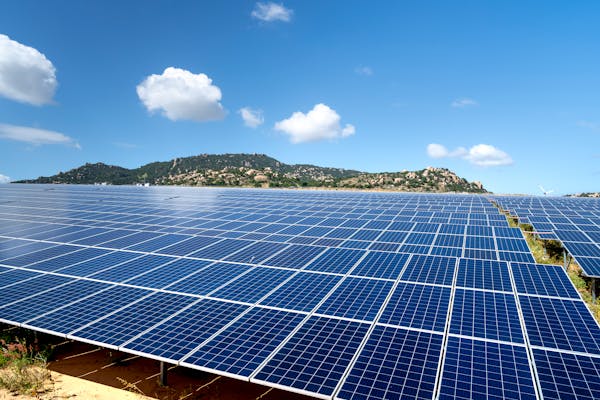
Monocrystalline panels are the most popular and efficient type of solar panel available today. They're made from a single, pure crystal of silicon, which allows electrons to flow more freely and generate more electricity.
How Monocrystalline Panels Are Made
The manufacturing process begins with a seed crystal of silicon that's dipped into molten silicon. As it's slowly pulled out, a single cylindrical crystal forms (called a "boule"). This crystal is then sliced into thin wafers, which become the solar cells. The single-crystal structure gives these panels their characteristic black color and high efficiency.
Monocrystalline Specifications
- Efficiency Range: 20-23% (up to 24% for premium models)
- Temperature Coefficient: -0.3% to -0.4% per °C (good heat performance)
- Degradation Rate: 0.3-0.5% per year
- Warranty: Typically 25-30 years product warranty
- Output Warranty: 90% at 10 years, 80-85% at 25 years
Pros of Monocrystalline Panels
- Highest Efficiency: More power per square foot than any other crystalline panel
- Space Efficient: Ideal for roofs with limited space
- Long Lifespan: 25-30+ years of reliable production
- Better Aesthetics: Uniform black color looks sleek and modern
- Better Low-Light Performance: Produces more electricity in cloudy conditions
- Lower Degradation: Maintains efficiency longer than other types
Cons of Monocrystalline Panels
- Higher Cost: Most expensive crystalline option
- Manufacturing Waste: Significant silicon waste during production
- Performance Drop in Shade: Entire panel affected if one cell is shaded
Top Monocrystalline Panel Brands (2026)
- SunPower Maxeon: 22.8% efficiency, 40-year warranty
- LG NeON R: 22.0% efficiency, excellent low-light performance
- Panasonic EverVolt: 21.7% efficiency, superior temperature coefficient
- REC Alpha: 21.7% efficiency, heterojunction technology
- Canadian Solar HiKu: 21.0% efficiency, excellent value
2. Polycrystalline Solar Panels
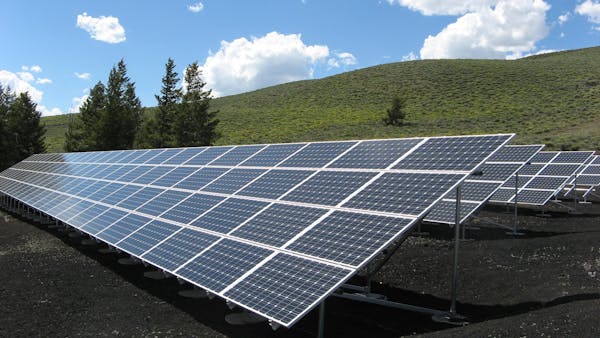
Polycrystalline panels (also called "multi-crystalline") are made from multiple silicon crystals melted together. They're easily recognizable by their blue, speckled appearance and offer a more affordable entry point into solar energy.
How Polycrystalline Panels Are Made
Instead of growing a single crystal, manufacturers pour molten silicon into a square mold and let it cool. This process creates multiple smaller crystals within each cell. The multi-crystal structure creates boundaries that slightly reduce electron flow, resulting in lower efficiency but significantly reduced manufacturing costs.
Polycrystalline Specifications
- Efficiency Range: 15-17% (up to 18% for premium models)
- Temperature Coefficient: -0.4% to -0.5% per °C
- Degradation Rate: 0.5-0.7% per year
- Warranty: Typically 25 years product warranty
- Output Warranty: 80% at 25 years
Pros of Polycrystalline Panels
- Lower Cost: 15-25% cheaper than monocrystalline
- Less Manufacturing Waste: More efficient use of raw silicon
- Good Value: Excellent balance of cost and performance
- Proven Technology: Decades of reliable performance data
- Widely Available: Many brands and options to choose from
Cons of Polycrystalline Panels
- Lower Efficiency: Need more space for same output as mono
- Heat Sensitivity: Performance drops more in high temperatures
- Aesthetics: Blue color and speckled appearance less appealing to some
- Shorter Lifespan: Slightly faster degradation than mono
Best Use Cases for Polycrystalline
- Large roof areas with ample space
- Budget-conscious homeowners
- Commercial installations where cost per watt is priority
- Ground-mount systems with no space constraints
3. Thin-Film Solar Panels
Thin-film solar panels represent a completely different approach to solar technology. Instead of crystalline silicon wafers, these panels use thin layers of photovoltaic material deposited on glass, plastic, or metal substrates.
Types of Thin-Film Technology
- Cadmium Telluride (CdTe): Most common thin-film type, 11-13% efficiency. Uses cadmium (toxic, but safely encapsulated) and rare tellurium.
- Copper Indium Gallium Selenide (CIGS): Higher efficiency (12-14%), flexible, but more expensive to manufacture.
- Amorphous Silicon (a-Si): Oldest thin-film type, 6-8% efficiency, used in calculators and small electronics.
- Organic Photovoltaics (OPV): Emerging technology using carbon-based materials, 10-12% efficiency in labs.
Thin-Film Specifications
- Efficiency Range: 10-13% (up to 15% for premium CIGS)
- Temperature Coefficient: -0.2% per °C (excellent heat tolerance)
- Degradation Rate: 0.5-1.0% per year
- Warranty: Typically 10-15 years product warranty
- Weight: 2-4 lbs per square foot (lightest option)
Pros of Thin-Film Panels
- Flexibility: Can be bent and applied to curved surfaces
- Lightweight: Ideal for roofs with weight restrictions
- Heat Tolerance: Best performance in hot climates
- Shade Tolerance: Less affected by partial shading
- Aesthetic Options: Can be made in various colors and transparency levels
- Low Manufacturing Cost: Simpler production process
Cons of Thin-Film Panels
- Lower Efficiency: Requires 2-3x more space than crystalline
- Shorter Lifespan: 15-20 years vs 25-30 for crystalline
- Faster Degradation: Loses efficiency more quickly
- Limited Residential Use: Most residential installers don't offer thin-film
- Toxic Materials: CdTe contains cadmium (though safely contained)
Best Use Cases for Thin-Film
- Building-integrated photovoltaics (BIPV)
- Commercial flat roofs with weight concerns
- Curved or irregular surfaces
- Portable and camping applications
- Hot desert climates
4. Bifacial Solar Panels
Bifacial panels are the latest innovation in solar technology. These panels capture sunlight from both the front and rear sides, potentially generating up to 30% more electricity than traditional single-sided panels.
How Bifacial Panels Work
Bifacial panels use transparent backsheets or dual glass construction that allows light to reach solar cells from both sides. The rear side captures reflected light (albedo) from the ground, roof, or surrounding surfaces. Light-colored surfaces like white roofs, concrete, or snow can significantly boost rear-side production.
Bifacial Panel Specifications
- Front Efficiency: 20-22% (comparable to premium mono)
- Rear-Side Gain: 5-30% additional production (depending on installation)
- Effective Efficiency: Up to 27% when rear gain is counted
- Temperature Coefficient: -0.3% per °C
- Warranty: Often 30+ years due to glass-glass durability
Pros of Bifacial Panels
- Higher Energy Production: 5-30% more than monofacial panels
- Exceptional Durability: Glass-glass construction resists degradation
- Extended Lifespan: 30+ years expected life
- Better Warranty: Often comes with 30-year warranties
- Excellent in Snow: Rear side captures light reflected from snow
- Lower Temperature Coefficient: Better hot weather performance
Cons of Bifacial Panels
- Higher Cost: 10-20% more expensive than standard mono
- Installation Requirements: Needs proper mounting height and surface
- Variable Performance: Rear-side gain depends heavily on installation
- Weight: Glass-glass panels are heavier
- Not Ideal for All Roofs: Best suited for ground mounts and carports
Optimizing Bifacial Panel Performance
- Install over white or light-colored surfaces (white TPO roofs, concrete, gravel)
- Use elevated mounting (at least 12 inches clearance for rear side)
- Avoid dark surfaces like asphalt or dark shingles beneath panels
- Consider ground-mount or carport installations for maximum rear-side gain
Which Solar Panel Type Should You Choose?
The best solar panel type depends on your specific situation. Here's our recommendation based on common scenarios:
Choose Monocrystalline If:
- You have limited roof space and need maximum efficiency
- Aesthetics matter and you prefer a sleek, black appearance
- You want the longest-lasting, most reliable technology
- Your budget allows for premium equipment
- Your roof receives partial shading and you'll use microinverters
Choose Polycrystalline If:
- You have ample roof space or ground-mount area
- Budget is your primary concern
- You want proven, reliable technology at lower cost
- Your location has consistently sunny weather
- Appearance is not a major factor
Choose Thin-Film If:
- You need flexible panels for curved surfaces
- Your roof has weight restrictions
- You're in an extremely hot climate
- You want building-integrated solar (BIPV)
- You need portable solar solutions
Choose Bifacial If:
- You're installing a ground-mount or carport system
- Your roof is white/light-colored TPO or metal
- You live in a snowy climate
- You want maximum long-term production
- You're willing to invest more upfront for higher returns
The Future of Solar Panel Technology
Solar technology continues to advance rapidly. Here are emerging technologies to watch:
- Perovskite Solar Cells: Lab efficiency over 29%, potentially very low cost
- Tandem/Multi-Junction Cells: Combining materials to exceed 30% efficiency
- Transparent Solar Panels: Solar windows and building facades
- Quantum Dot Solar Cells: Nanoscale technology for improved efficiency
- Solar Shingles: Roof-integrated panels that replace traditional shingles
Conclusion
Understanding the different types of solar panels helps you make an informed decision for your home or business. While monocrystalline panels remain the most popular choice for residential installations due to their efficiency and aesthetics, each type has its place depending on your priorities.
Ready to calculate how much energy you could produce? Use our free Solar Production Calculator to get accurate estimates based on your location, regardless of which panel type you choose.